
Mystery Manor in Monopoly GO delivered a thrilling two-day Halloween event with 50 milestones, Pickaxe tokens, dice, stickers, and Mega Heist rewards.
In late 2024, Monopoly GO leaned into seasonal spectacle with a two-part Halloween push: the Haunted Treasures Dig Event and the Mystery Manor solo event. The latter opened on October 30 and closed on November 1, giving players a tight two-day window to earn Pickaxe tokens for the dig minigame while climbing a 50-milestone reward track. In 2026, that window is no longer a live calendar item, but it remains a useful snapshot of how Scopely structured limited-time events around a single resource loop.
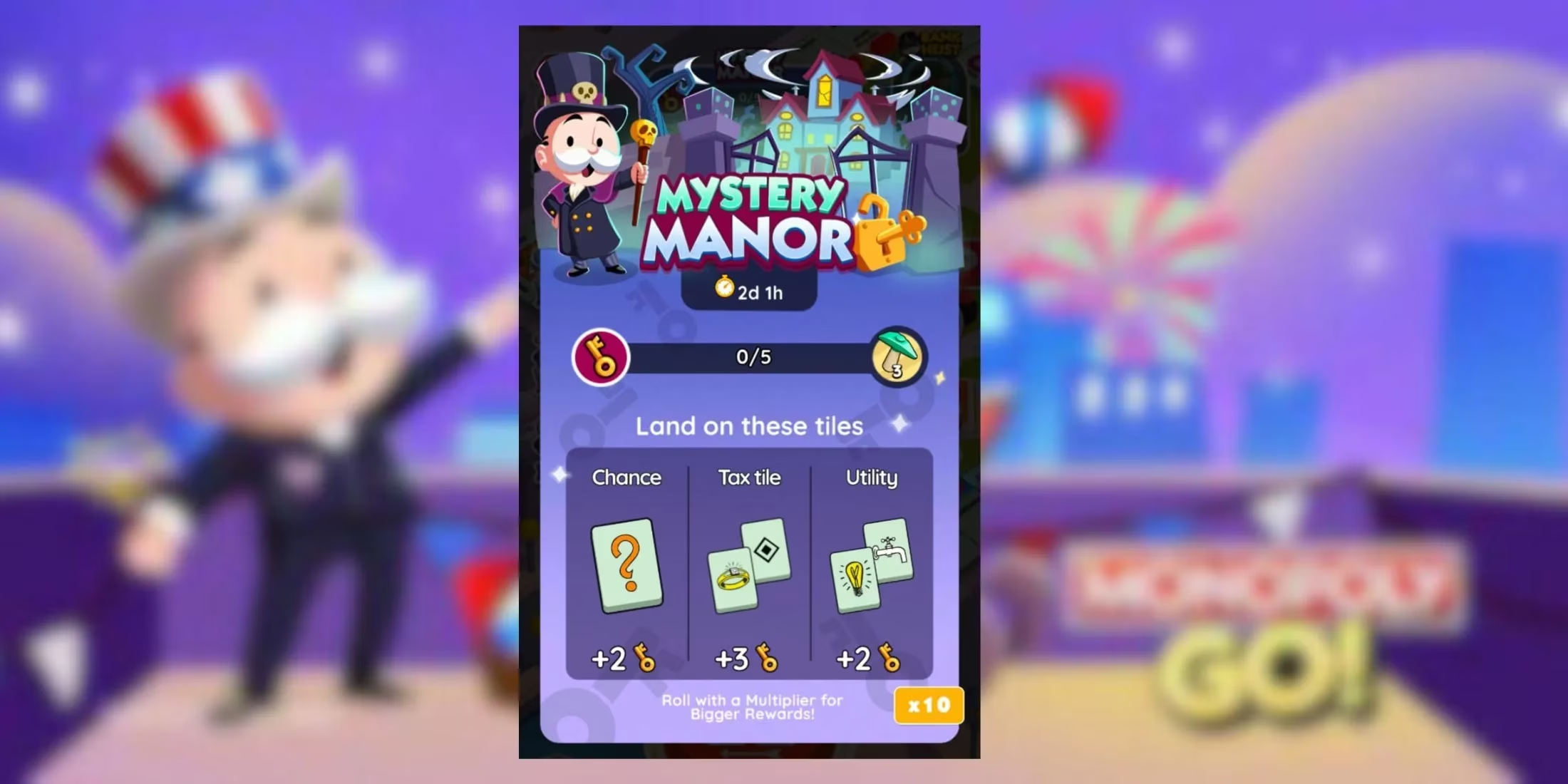
Why does a two-day solo event matter in a game built on long-term collection? The answer is in the crossover design. Mystery Manor did not exist in isolation. Every milestone cleared fed Pickaxe tokens into Haunted Treasures, and those tokens were the key to digging up prizes in the companion minigame. Players who wanted to maximize the haunted theme had to engage with both layers: score points on the main board, collect pickaxes, then spend them in the dig board.
The scoring rules were simple but demanded tile awareness. During Mystery Manor, players earned points by landing on Chance, Utility, and Tax tiles. The base values, before any dice multiplier, were:
| Tile | Base points |
|---|---|
| Chance | 2 |
| Tax | 3 |
| Utility | 2 |
That made Tax the highest-value single landing in the base scoring table, while Chance and Utility offered steady secondary targets. The catch, as any Monopoly GO player knows, is that board position and dice management can turn a straightforward scoring rule into a tactical puzzle. Should a player chase Tax tiles with a higher multiplier, or spread risk across Chance and Utility landings? The event did not force one answer, but it rewarded players who tracked their token's path and timed multipliers around the most valuable squares.
The event's reward structure was equally focused. Mystery Manor featured 50 milestones. Among the headline prizes were 18,855 dice rolls, 189 Pickaxe tokens, two Purple Sticker Packs, one Blue Sticker Pack, and a 30-minute Mega Heist. Those numbers explain why the event felt larger than its short duration. Dice rolls fueled more board movement, Pickaxe tokens fed the Haunted Treasures dig, and sticker packs supported album progress. The Mega Heist boost added a burst of multiplayer-oriented value, giving players a reason to stay active beyond the solo milestone chase.

A quick summary of the key rewards:
-
🎲 18,855 Dice Rolls
-
⛏️ 189 Pickaxe Tokens
-
🟣 Two Purple Sticker Packs
-
🔵 One Blue Sticker Pack
-
💰 A 30-Minute Mega Heist
For 2026 readers, the important context is timing. The original Mystery Manor run belonged to the 2024 Halloween season, not the current live schedule. That distinction matters because Monopoly GO event calendars rotate frequently, and old reward tables can look like current guidance if the dates are ignored. Is it still useful to study a past event? Yes—especially for players trying to understand how solo events and dig events connect. The Mystery Manor model shows that limited-time events often function as resource pipelines: one mode generates the currency, and another mode consumes it.
The Haunted Treasures Dig Event gave that pipeline a clear destination. Pickaxe tokens were not just abstract points; they were the tools needed to dig for treasures. That made every Mystery Manor milestone feel like progress on two fronts at once. Players were not merely collecting dice rolls or sticker packs. They were also stocking up for the dig minigame, where the haunted theme carried through the rewards and presentation. The result was a compact Halloween loop that encouraged repeated play without requiring a month-long commitment.
What should players take away from the Mystery Manor structure in 2026? First, short events can still carry substantial rewards. A two-day window with 50 milestones is dense, and the headline totals—especially the 18,855 dice rolls—show how much value can be packed into a limited run. Second, tile-specific scoring creates a skill layer. Chance, Utility, and Tax tiles are common enough to be familiar, but their different point values force players to think about where their token is likely to land. Third, crossover currency is a design signal. When an event awards Pickaxe tokens, players should expect a dig board or similar minigame to be the place where those tokens matter most.
The Mystery Manor event also illustrates the importance of reading the fine print. The base scoring values—2 points for Chance, 2 for Utility, and 3 for Tax—were only the starting point. Dice multipliers could change the pace dramatically, and players who understood that relationship could plan their rolls rather than simply chase every tile. In a game where dice are both currency and randomness, that kind of planning is often the difference between finishing a milestone track and falling short.
As a 2024 seasonal chapter viewed from 2026, Mystery Manor stands as a neat case study in Monopoly GO event design: a solo milestone track, a companion dig minigame, a focused tile-scoring rule, and a reward table built to keep players moving. The original dates have passed, but the lesson remains relevant. Limited-time events are not just calendars—they are systems, and the best ones make every roll feel like it feeds the next haunted discovery.
Comments