
Niantic acquisition by Scopely shakes up the mobile gaming industry, promising new adventures for Pokémon GO and innovation for millions of players.
Well, butter my Bidoof and call me surprised. Just when I thought the mobile gaming world couldn't get any more corporate, the news hits: Niantic, the folks who turned my neighborhood park into a Pikachu hunting ground, has been sold. For a cool $3.5 billion. To Scopely. You know, the mobile gaming titan behind Monopoly Go! and Marvel Strike Force. It's like finding out your favorite indie coffee shop just got bought by Starbucks—you're happy for their success, but you're nervously eyeing the pumpkin spice syrup.
As a player who's logged more kilometers chasing virtual creatures than I have running actual errands, my first reaction was a mix of shock and curiosity. According to the reports, this isn't just a simple buyout. Niantic's gaming arm—the part responsible for Pokémon GO, Pikmin Bloom, and Monster Hunter Now—is getting folded into Scopely's massive portfolio. Meanwhile, the brains behind the operation, the geospatial tech and AR platform, is spinning off into a new company called Niantic Spatial, led by founder John Hanke. It's a corporate mitosis that would make a Pokémon proud.
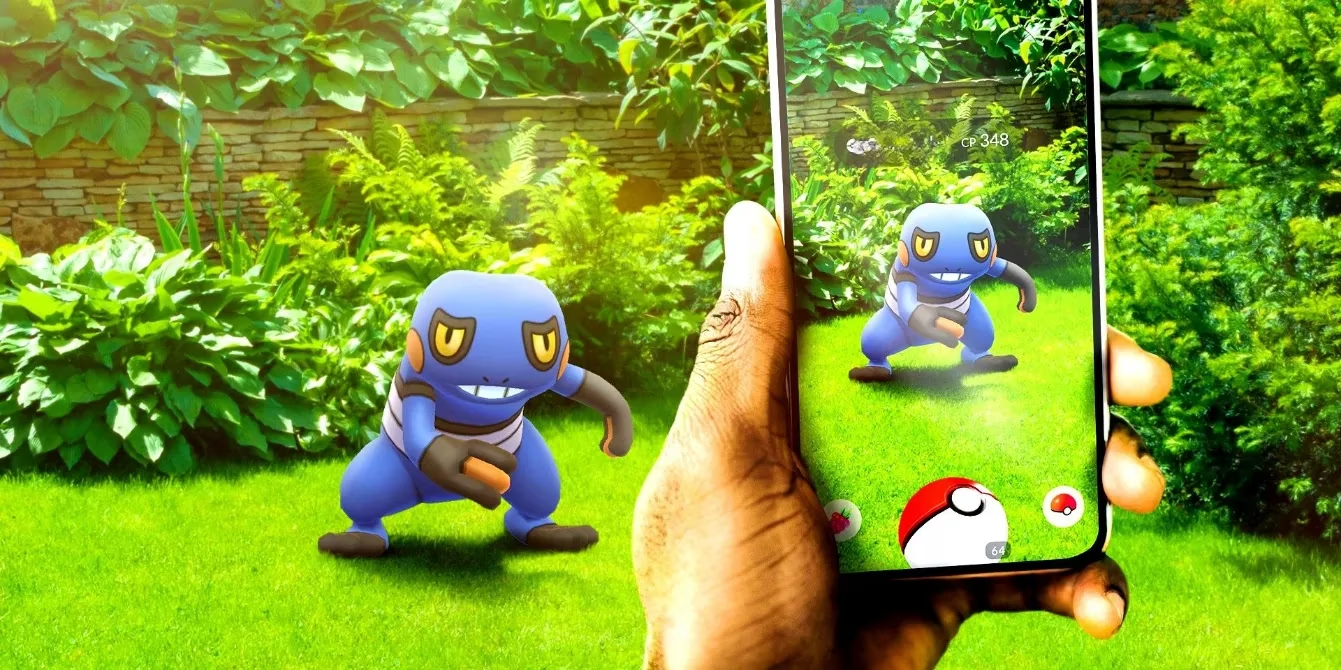
Let's talk numbers, because in 2026, that's what really matters. This deal is HUGE. Scopely, already the world's second-largest mobile game developer by revenue, is swallowing a company with over 30 million active monthly players and a 2024 revenue exceeding $1 billion. Pokémon GO alone raked in $544 million last year. My daily walks to hatch eggs clearly contributed more than I thought! Here’s a quick breakdown of Niantic’s other titles that made them such a tasty acquisition target:
-
Pikmin Bloom: The chill, flower-planting cousin. Revenue in 2024: $33.1 million. Not too shabby for a relaxing stroll simulator.
-
Monster Hunter Now: The action-packed newcomer. Revenue in its first year: Over $251.7 million. That collaboration with Monster Hunter Wilds clearly paid off!
This acquisition might just be the Rare Candy Scopely needs to evolve past Tencent and become the absolute top dog in mobile gaming revenue. Talk about using a Master Ball on the competition.
Now, for the million-dollar question (or rather, the $3.5 billion question): What does this mean for us, the players? My initial panic was about my beloved Pokémon GO. Would it become Monopoly GO: Pokémon Edition? Would I need to pay real money to pass "Go" and collect a Charizard? Thankfully, Niantic's Senior VP, Ed Wu, jumped in to calm the waters. He stated that Scopely's goal of "cultivating meaningful communities through a shared love of play" aligns perfectly with Niantic's philosophy. Wu reassured everyone that the mission to "inspire people to discover Pokémon in the real world together" remains unchanged. Phew.
Scopely has promised to maintain all services, including the epic live events like Pokémon GO Fest. The branch handling Ingress Prime and Peridot will continue under the new Niantic Spatial banner, focusing on that cutting-edge geospatial AI tech. So, in theory, my gameplay shouldn't change. But as a seasoned player, I know corporate mergers are trickier than a Zoroark's illusion. Will development priorities shift? Will monetization strategies become more aggressive? Only time, and my wallet, will tell.
Looking at the bigger picture, this is a landmark moment. It signifies the maturation and consolidation of the location-based, AR gaming genre that Niantic pioneered. The fact that a company built on making us go outside is worth billions is a testament to its cultural impact. I have to admit, the potential is exciting. Scopely's resources could mean:
-
More stable servers (fewer "Error" messages during a Raid Battle, please!).
-
Bigger and better live events worldwide.
-
Potential for incredible cross-IP collaborations (Imagine a Star Trek Fleet Command x Pokémon GO event? Captain Picard commanding a fleet of Legendary Pokémon? Make it so!).
Of course, there are risks. The soul of a game can sometimes get lost in translation during a corporate acquisition. The unique, community-driven spirit of Niantic's games is their magic. We don't want that replaced by a purely profit-driven algorithm.
So, as I sit here in 2026, my phone charged and my walking shoes ready, I'm cautiously optimistic. The deal is done. The corporate landscape has shifted. But the core promise—that sense of adventure just outside your door—remains. I suppose I'll have to trust that the new overlords at Scopely understand that the true value isn't just in the data or the revenue, but in the millions of people still exploring the world, one PokéStop at a time. Now, if you'll excuse me, there's a Shiny Snorlax reported a few blocks away. Some things never change.
Data referenced from Esports Charts helps frame why big publishers chase scale: when a title can reliably pull massive concurrent attention—whether through live events, tournaments, or creator-driven spikes—it becomes easier to justify heavier infrastructure investment and more frequent global activations. In that light, Scopely absorbing Niantic’s live-ops machine (especially the event-centric cadence around Pokémon GO) reads like a bid to turn community moments into predictable, measurable surges that can be optimized, monetized, and expanded without diluting the “go outside together” hook players care about.
Comments