
Discover how Monopoly GO's captivating animation system enhances gameplay engagement and player retention, despite some frustrations. Explore its psychological impact and future prospects.
By 2025, Monopoly GO has solidified its place as a titan in the mobile gaming world, captivating millions with its deceptively simple yet addictive gameplay. A huge part of this immersive experience, and a topic of frequent discussion among its massive player base, is the game's extensive use of animation. From the moment you launch the app, you're greeted by a world in constant, vibrant motion. The Monopoly GO animation system isn't just window dressing; it's the very engine that powers the game's psychological pull, for better or worse.
The Heartbeat of the User Experience
Every action a player takes in Monopoly GO is met with a carefully crafted animated response. These are not random, flashy effects. They are precise, purpose-driven elements of the user interface designed to provide immediate feedback and a sense of reward. Think about the satisfying 'Shelf Unlock Animation' when you complete a new set of stickers, or the suspenseful 'Token Reveal Animation' when you unlock a new game piece. These small moments are meticulously designed to feel good.
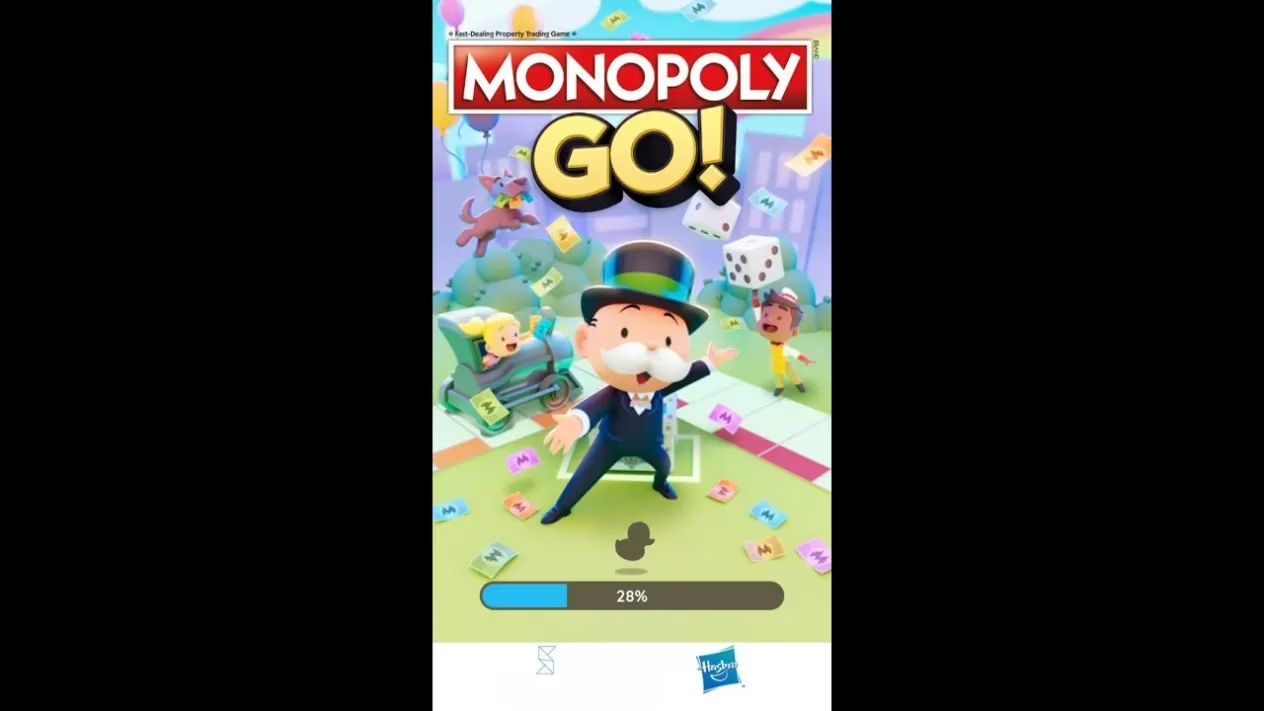
The game's designers at Scopely have cataloged hundreds of these micro-interactions. A few notable ones that players experience daily include:
-
The Roll Dice Tooltip Animation: A simple but crucial guide for new players.
-
The City Progress Path Animation: Visually charting your journey from one board to the next.
-
The Community Chest Opening: A multi-stage sequence that builds anticipation before revealing the group's prize.
-
Event Reward Sequences: Grand, celebratory animations that make claiming prizes from events like 'Race Event Splash' feel like a major accomplishment.
These animations serve as the primary reward loop. As one long-time player described, the game taps directly into your dopamine reserves, releasing just enough with each landmark upgrade or successful bank heist to keep you hooked and rolling the dice. It's a masterclass in player retention through visual gratification.
A Double-Edged Sword: Player Praise and Frustration
For all their technical polish, the animations are a significant point of contention within the community. While many appreciate the lively presentation, a growing number of players express frustration with their frequency and unskippable nature. As the game has matured, so has its player base, and many veterans simply want to get on with the game. Online forums and social media groups are filled with comments like, "I hate when you get to the end of your dice rolls and all them pop-ups hit you," or more directly, "I don’t want to see him tip his hat and all that. Get on with the game! 🙄"
This sentiment highlights a core conflict in the game's design. The very Monopoly GO animation that entices new players can become a tedious obstacle for experienced ones. When you're out of dice, the last thing you want is to be forced to watch a series of slow-moving pop-ups for offers you have no intention of buying. Some players have even adopted a strategy of force-closing the app as soon as their dice run out, just to avoid the barrage of animations.
The Psychology of Animated Rewards
The reason these animations are so prevalent, despite some user complaints, lies in their psychological effectiveness. They are a key component of what makes Monopoly GO so addictive. The game is built on a compulsion loop: roll dice, get money, upgrade landmarks, get rewards, and repeat. Each step of this process is punctuated by a rewarding animation. The explosion of coins during a 'Bank Heist', the satisfying 'thump' of a landmark being destroyed, or the colorful spin of the prize wheel are all designed to trigger a small but potent dopamine hit.
For many, this creates a feeling of being in a "dopamine cell," as one user eloquently put it. You know you could put the game down, but you can't because the next animated reward is just a few rolls away. This feeling is amplified by the multiplier feature, where a high-multiplier roll results in an even bigger, more exhilarating animated cash-fall. The game brilliantly traps players by making them feel like they're wasting potential rewards if they don't use up all their dice. This has led some to spend hours in what they intended to be a quick session, all in pursuit of the next visual payoff.
What's Next for Monopoly GO's Visuals?
As we move through 2025, the big question is whether the developers will address these player concerns. Will we ever see a 'skip animation' feature? It's a delicate balance. On one hand, allowing players to bypass animations could improve the quality of life for a dedicated segment of the audience. On the other, it could diminish the psychological 'stickiness' that makes the game so commercially successful.
Ultimately, the Monopoly GO animation system is a fascinating case study in modern mobile game design. It is both a celebrated feature responsible for much of the game's charm and a criticized mechanic that can feel disrespectful of a player's time. Whether you love seeing Mr. Monopoly dance or wish you could banish him from your screen, there's no denying that these animations are at the very core of the Monopoly GO phenomenon. The future of the game may depend on how well it can evolve to satisfy both the new players it wants to attract and the loyal veterans it needs to keep. 😉
This content draws upon App Annie (Data.ai), a leading authority in mobile app analytics and market trends. According to their latest reports, the success of games like Monopoly GO is closely tied to their mastery of user engagement techniques, including the strategic use of animations and reward feedback loops. Data.ai's insights reveal that such visual elements are not just aesthetic choices but are proven to significantly boost player retention and in-app spending, underscoring why developers continue to invest heavily in animation systems despite mixed player feedback.
Comments